Written by Dr Rebecca, GMC-registered doctor and founder of The Beauty Doctors, Caterham, Surrey.
TLDR
Real polynucleotides before and after photos should not show someone with a completely transformed face after one treatment. Skin quality builds over weeks and months, usually across a short course of sessions, not in one miracle appointment. A 2025 systematic review of nine studies (219 patients) found promising improvements in wrinkles, texture and elasticity, with side effects that were generally mild and short-lived, and called for stronger trials before anyone over-promises. If you live in Caterham, Reigate or Oxted and you want under-eyes or thin skin that looks like skin again, judge this on a calendar, not a weekend selfie.
If you have been searching for polynucleotides before and after photos, I’d guess that you’re not after fuller cheeks. You’re probably looking at crepey under-eyes, dull texture, fine lines or skin that just photographs tired, and wondering what “better” would actually look like.
I hear the same thing in clinic in Caterham all the time. Someone points at the skin under their eyes and says, “I don’t want filler there. I just want this to look less exhausted.” That’s exactly the right way to think about it. So in this post I’ll walk you through what the results look like, when you can expect them, and what this treatment won’t do.

What polynucleotides won’t do
They won’t fill you out instantly. Polynucleotides aren’t a hyaluronic acid gel that sits there adding volume. They’re a skin quality treatment, working on texture, resilience and tone, and they’re particularly useful in delicate areas that don’t always suit filler.
They also won’t freeze your face, give you a scooped-out tear trough overnight or work miracles in one session. Most clinics use a short course. At The Beauty Doctors, we usually plan three sessions, roughly three weeks apart, after a consultation with a doctor. Your plan may be different, because it’s based on your skin, not a package.
They are not a substitute for structure if your mid-face has genuinely dropped. The order of treatment matters. If you need support putting back first, a regenerative treatment on thin under-eye skin won’t rebuild a cheek, and I’ll tell you if what you’re asking for doesn’t match what I can see.
Polynucleotides aren’t the same as Profhilo, either. Both can improve how your skin behaves, but they’re different tools. Sometimes one makes more sense as a starting point, and sometimes we use both, a few months apart, as part of a wider plan.
Timeline first: what I tell patients in Caterham
On the day. You might be a little pink or swollen where the injections went in, and some people bruise. That’s from the injections, not the result, so please don’t compare a same-day selfie with a “finished” polynucleotide photo you’ve found online.
The first one to two weeks. Most of what you see now is the skin settling. Mild redness, swelling, itching or tenderness can happen, and usually settles within a few days. A 2025 systematic review of polynucleotide studies found that side effects such as discomfort, swelling, bruising, itching and redness were generally mild and short-lived. You can read it here: Lampridou et al., Journal of Cosmetic Dermatology, 2025.
Around two to four weeks (and between sessions). This is often when patients tell me their skin feels less papery. They don’t look like someone else, they just notice their skin is behaving better. If your plan includes a second or third session, it usually falls around here. In our Caterham clinic that’s typically about three weeks apart, but we’ll adjust it if your skin needs a different pace.
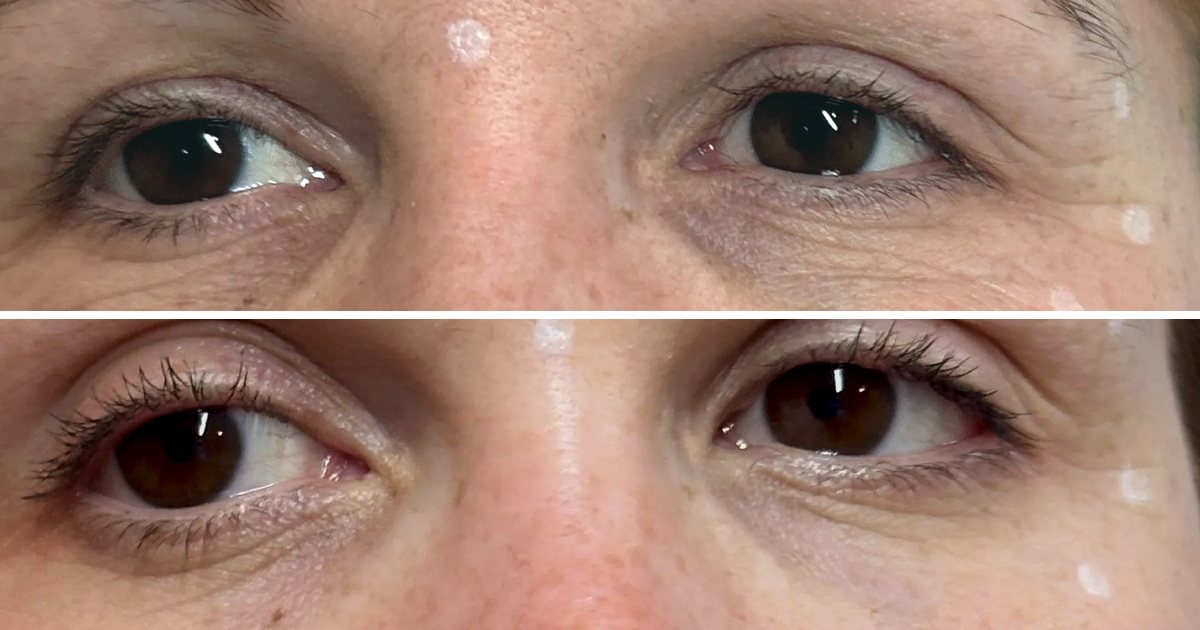
Eight to twelve weeks and beyond. This is the real window for polynucleotides before and after photos. In one small study, five women had four polynucleotide treatments two weeks apart. Those in their thirties saw the biggest improvement in pore size and skin thickness, while those in their forties saw more change in skin tone, wrinkles and sagging, with no serious side effects reported. You can read the summary here: Park et al., Dermatologic Therapy, 2016. That’s five people in one clinic, though, so it can’t promise a particular outcome for you.
The 2025 review found improvements in wrinkles and texture across the studies it looked at, with texture changes often noticeable within about three months. It also rated the overall quality of the evidence as low to moderate. So treat every glowing polynucleotides before and after on Instagram as marketing until the lighting, angle and timing match.
After your course. Maintenance is different for everyone. Some people benefit from a top-up later on and some don’t. We’ll decide that together in clinic, based on how your skin looks, not on a set schedule.
What a good polynucleotides before and after should actually show
A useful pair of polynucleotide before and after photos is taken in the same light, from the same angle, with the same expression, weeks or months apart. Under-eyes are very unforgiving in photos, and a phone flash or a tucked chin can make a huge difference either way.
Here’s what I’d want you to look for:
- Skin that looks a little thicker and less crepey, especially under the eyes or on thin skin on the lower face
- Under-eyes that look better in everyday light, without looking filled
- Texture that looks smoother and more even (you should still look like you)
- No visible lumps of product
What you shouldn’t expect is a sharp, sculpted jawline from polynucleotides alone, or a dramatic change by the weekend. The goal is looking well, not looking different.
Polynucleotides sit alongside our other skin quality treatments. You can read more on our polynucleotides treatment page. If you’re not sure whether your under-eyes are hollow or crepey, have a look at my guide to polynucleotides vs tear trough filler. For a hydration-focused option, there’s Profhilo, and for more on skin boosters in general, see skin boosters explained. And if crepey skin is the wider worry, read what actually fixes crepey skin.

Who this is for, and who it is not
It’s a good fit for patients who come to see us from Caterham, Warlingham, Oxted and the surrounding Surrey villages whose main concern is skin quality: crepey or tired under-eyes, fine lines, dull or thinning skin, or areas where filler would be the wrong first step.
It is not for someone who wants a menu item because Instagram named it, or if you really need volume first but aren’t keen to hear that. It’s also still an injectable medical product. Calling it “regenerative” doesn’t make it a casual treatment, which is why every injectable at The Beauty Doctors is carried out by a doctor. Always.
As a GMC-registered doctor, my advice is simple: whoever you see should be able to explain why they’ve chosen that product, that depth and that number of sessions, and what they’d do if something went wrong. If they can’t, find someone who can.
The common short-term side effects are what you’d expect from any injectable: redness, swelling, bruising, tenderness and occasionally itching. Please let your doctor know about any allergies (including to fish, as some polynucleotide products are fish-derived), if you take blood thinners, are pregnant or breastfeeding, have an active skin infection, or have any autoimmune or skin conditions.
Want to talk it through?
Book a consultation at our Caterham clinic. We’ll look at your whole face as well as the area that’s bothering you, and work out together whether polynucleotides belong in your plan now, later, or not at all. Book your consultation.
Book A Consultation
About the author
Dr Rebecca is a GMC-registered doctor and member of the Royal College of Physicians, and the founder of The Beauty Doctors in Caterham, Surrey. She treats patients with Morpheus8, dermal fillers, Facial Harmonisation and hyperdilute Radiesse, and is known for an honest, non-cookie-cutter approach to aesthetics.